The key to reducing dental
costs is prevention. there is a lot that you can do to avoid dental
problems.
Regular Dental check ups.
and fluoride applications.
Periodically, your dentist
may recommend to take x-rays to find hidden conditions that can
threaten your oral and general health.
Eating healthy and flossing
between meals is essential for good oral health.
SERVICES AVAILABLE
EXAMS - CLEANINGS- AND X-RAYS.
PREVENTIVE SEALANTS AND FLUORIDE TREATMENT NATURAL LOOKING FILLINGS,
BONDING, AND CAPS BRACES
HAPPY GAS (NITROUS OXIDE) SEDATION AVAILABLE ADVANCED STEAM STERILIZATION.
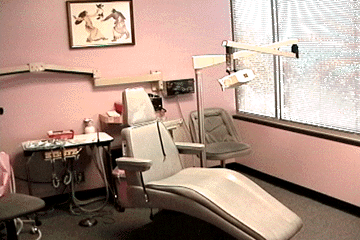
Take a look at our office and see for yourself how comfortable
you will be!
We will treat your children like
our own!
Flosses and Picks
Plaque is a sticky layer
of material that contains germs that accumulates on teeth, including
places where toothbrushes can't reach. This can lead to gum disease.
The best way to get rid of plaque is to brush and floss your teeth
carefully every day. The toothbrush cleans the tops and sides
of your teeth. Dental floss cleans in between them. Some people
use waterpicks, but floss is the best choice.
Should I floss?
Yes. Floss removes plaque
and debris that adhere to teeth and gums in between teeth, polishes
tooth surfaces, and controls bad breath. Floss is the single most
important weapon against plaque, perhaps more important that the
toothbrush. Many people just don't spend enough time flossing
or brushing and many have never been taught to floss or brush
properly. When you visit your dentist or hygienist, ask to be
shown.
Which type of floss should I use?
Dental floss comes in many
forms; waxed and unwaxed, flavoured and unflavoured, wide and
regular. Wide floss, or dental tape, may be helpful for people
with a lot of bridgework. Tapes are usually recommended when spaces
between are wide.
They all clean and remove plaque about the same. Waxed floss might
be easier to slide between tight teeth or tight restorations.
However, the unwaxed floss makes a squeaking sound to let you
know your teeth are clean.
Bonded unwaxed floss does not fray as easily as regular unwaxed
floss, but tears more than waxed floss.
Bottom line...it's a personal choice!!!
How should I floss?
Take an 18-inch piece of
floss and wind the bulk of the floss lightly around the middle
finger. (Don't cut off your finger's circulation!) Wind the rest
of the floss similarly around the same finger of the opposite
hand. This finger takes up the floss as it becomes soiled or frayed.
Maneuver the floss between teeth with your index fingers and thumbs.
Don't pull it down hard against your gums or you will hurt them.
Don't rub it side to side as if you're shining shoes. Bring the
floss up and down several times forming a "C" shape
and be sure to go below the gum line.
How often should I floss?
At least once a day. To
give your teeth a good flossing, spend at least two or three minutes.
What about floss holders?
You may prefer a pre-threaded
flosser or floss holder, which often looks like a little hacksaw.
Flossers are handy for people with limited dexterity, for those
who are just beginning to floss, or for caretakers who are flossing
someone else's teeth.
Is it Safe To Use Toothpicks?
In a pinch, toothpicks
are effective at removing food between teeth, but for daily cleaning
of plaque between teeth, floss is recommended. Toothpicks come
round and flat, narrow and thick. When you use a toothpick, don't
press too hard or you can damage your gums.
Do I Need a Waterpick (irrigating
device)?
Don't use waterpicks as
a substitute for toothbrushing and flossing. But they are effective
around orthodontic braces or under bridgework that retains food
in areas the toothbrush cannot reach. However, they do not remove
plaque.
Waterpicks are frequently recommended for persons with periodontal
disease. Solutions containing antibacterial agents like chlorhexidine
or tetracycline, available through a dentist's prescription, can
be added to the reservoir.